OUTREACH

EDUCATIONAL OUTREACH

I feel a deep sense of joy every time I hear, “She’s a real-life scientist!” at an outreach event. For much of my life, I didn’t see a future in science as a legitimate possibility for myself. Growing up, the National Geographic documentaries that sparked my love for science didn’t feature people who looked like me or offer much BIPOC representation. Moreover, with limited funding for scientific research in Mexico, it felt like an unrealistic path.
It wasn’t until I encountered teachers, mentors, and professors who made science feel accessible that I began to find certainty in my career path. I can still recall specific individuals who nurtured my curiosity, encouraged my learning, and shaped the scientist I am today. I hope to have that same impact on at least one person. Outreach is incredibly fulfilling, not only because I get to share my passion, but because of the mutual exchange—more often than not, I find that I learn more than, or as much as, I teach.


Interactive Fish Diet Analysis Activity

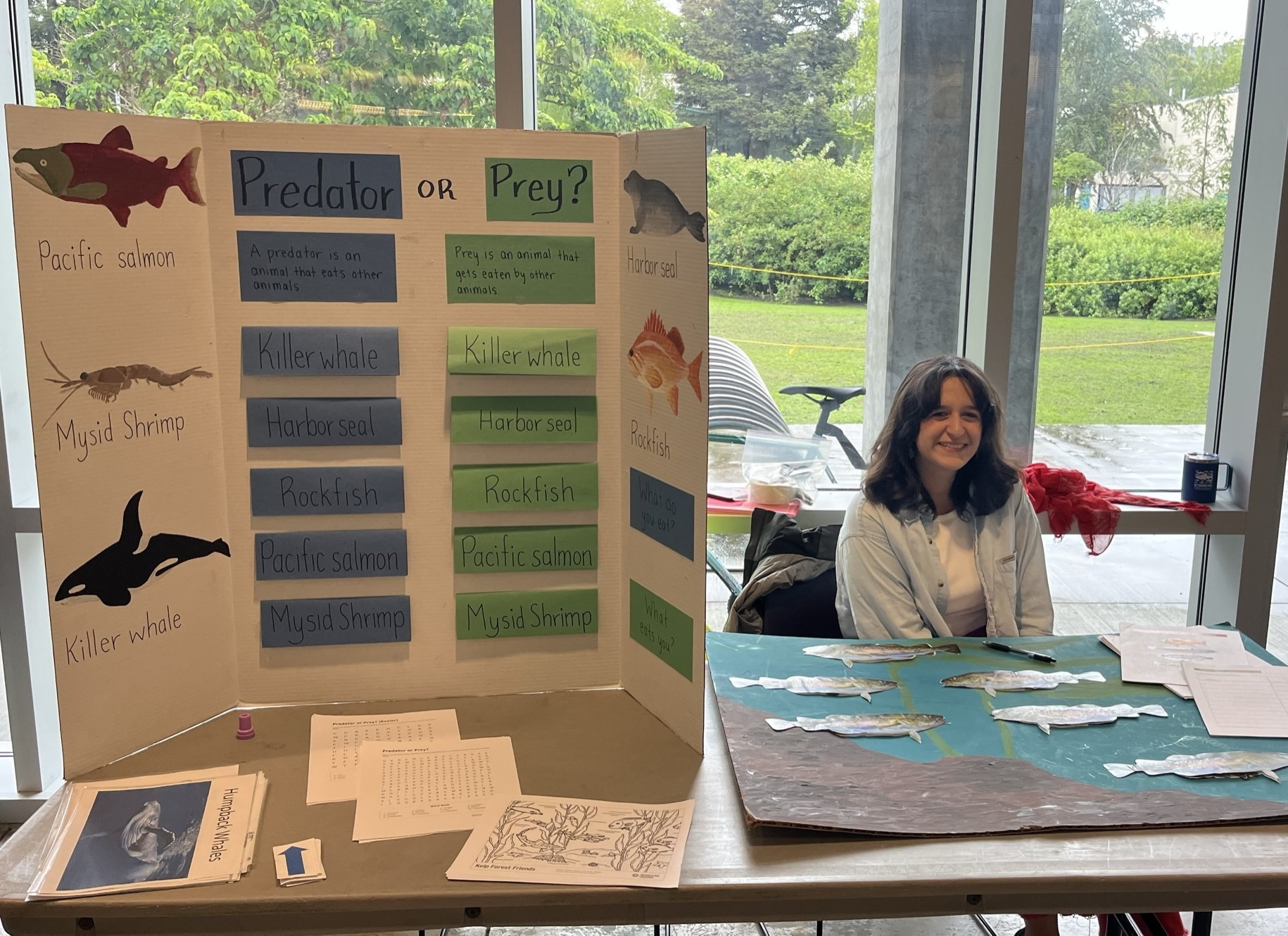
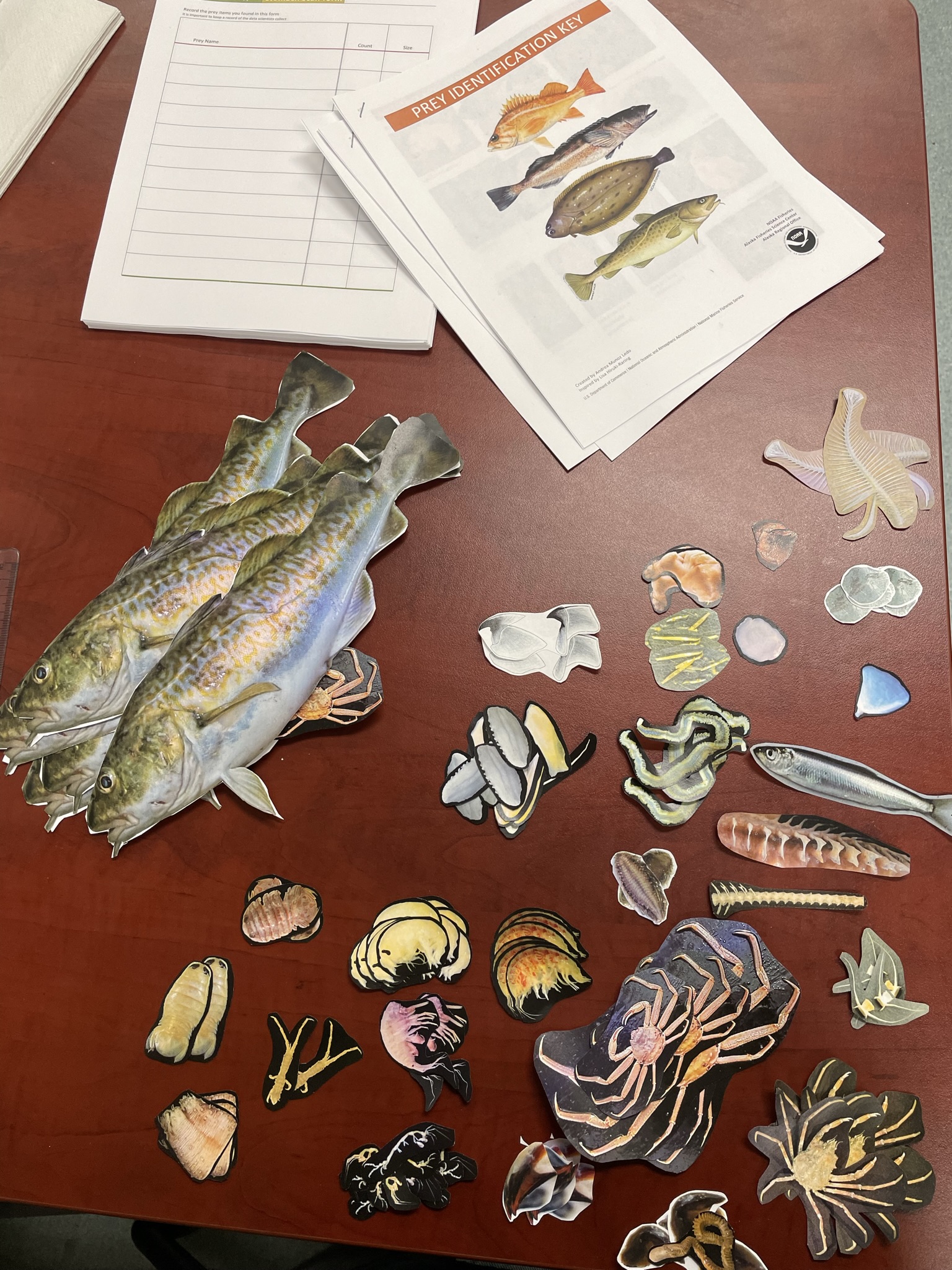
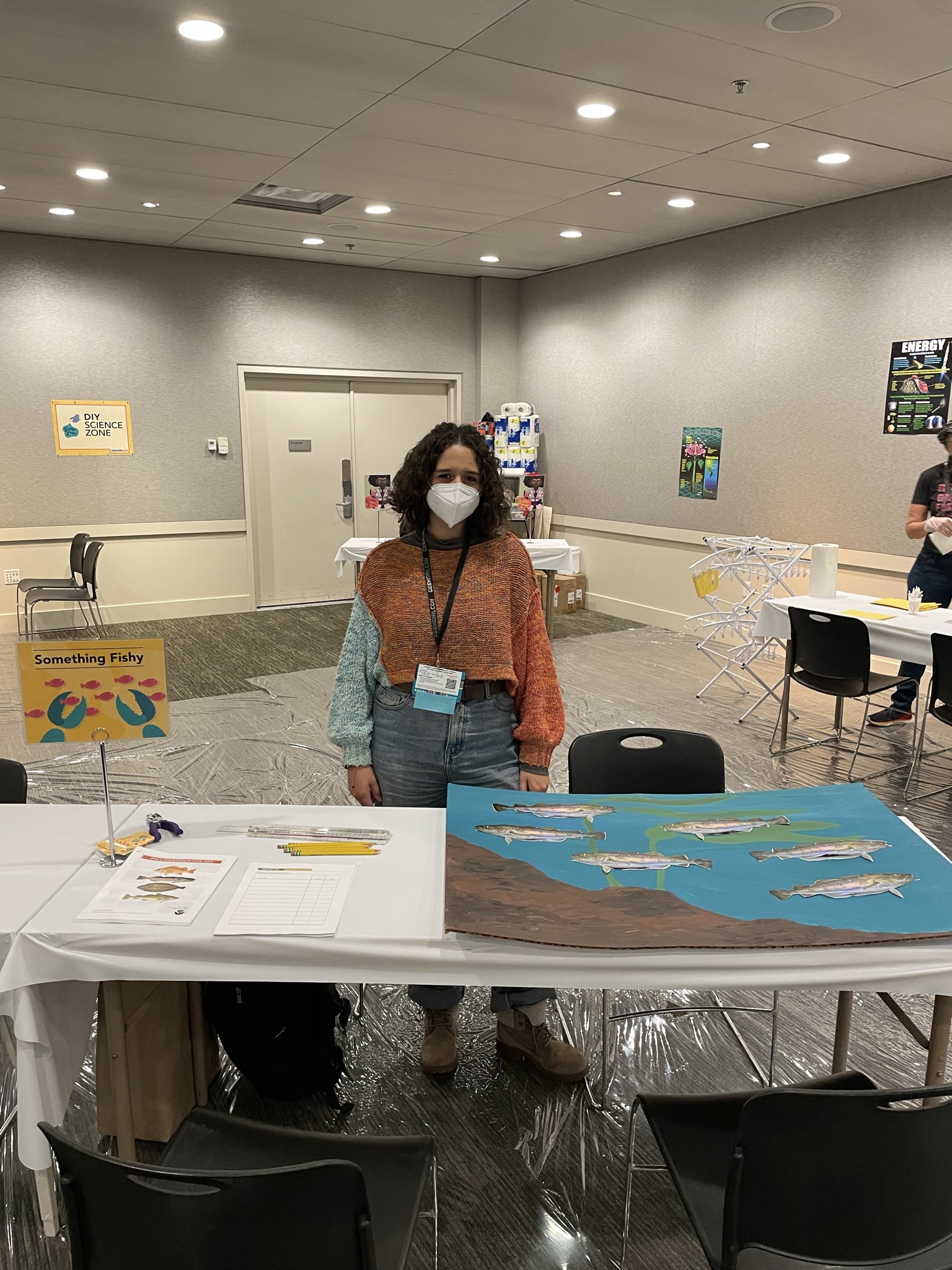
I originally designed this activity for a science convention aimed at children from underrepresented backgrounds in STEM. As a volunteer hosting an "activity booth," I wanted to create something highly interactive, adaptable to different age groups, and reflective of my work.
The activity features paper Pacific cod that can be "stuffed" with cut-out prey items in various stages of digestion. These prey include benthic invertebrates, crab, and fish—some whole, others in parts (such as bones, jaws, claws, setae, otoliths), mimicking the types of remains we commonly find in actual stomach samples. Children spread the "stomach contents" on a table and use a mock key I developed to identify the prey, then record their data and measurements. I wrap up the activity by inviting students to share why they think this kind of work is important, allowing space for questions or reflections. For toddlers, the activity can be a simple matching game, while for older students, it incorporates math and critical thinking.
Facilitating this activity at conventions, school science nights, class sessions, and fairs has sharpened my science communication skills. As an educator in these settings, it’s my responsibility to ensure the activity is both engaging and educational for a diverse audience. I’ve found that the more I understand each child’s unique needs, the more deeply they are able to engage with the activity.
Students Explore Aquatic Sciences (SEAS)

I am an active member of SEAS, a volunteer-run outreach program at the University of Washington's School of Aquatic and Fishery Sciences. The primary mission of SEAS is to increase access to science education for K-12 students from underserved communities in the Seattle area. We organize and lead various project-based and interactive learning opportunities at no cost to participants, including an annual “Open House” with numerous activity booths.
In my role, I’ve led several classroom lessons, primarily focused on marine ecology and water science. These sessions are typically fast-paced and hands-on, guiding students through three to four interactive activities. Given the volunteer-based nature of SEAS, I often step in on short notice to help. Flexibility is key, and I’m always eager to contribute, schedule permitting.
On several occasions, I’ve led lessons or provided translation in Spanish, particularly when there’s a large Spanish-speaking cohort. There's always a special moment when I announce, in Spanish, that I’m from Mexico and will be translating. Seeing the students' faces light up is incredibly rewarding, especially as we work together to find the right Spanish translations for scientific terms. Despite being fluent in Spanish, many of these concepts are ones I first encountered after moving to the U.S., and I love the collaborative learning experience this creates. I recognize the privilege I had in attending a bilingual school in Mexico, which helped me become fluent in English before I moved.
At school fairs and our annual Open House, I typically host an activity booth offering students the choice between my fish diet analysis activity or a food-web-building exercise. For the food web activity, students arrange large panels of Puget Sound organisms, connected by arrows to illustrate who eats whom. I encourage students to guess predator-prey relationships and the arrow direction with minimal guidance, fostering independent thinking. Afterward, we rework the food web together to ensure accuracy, discussing how size and feeding ecology offer clues about trophic dynamics. I often inquire about the significance of arrow direction, but rarely expect an answer given it’s an advanced concept for their age. A young student once answered that arrows represent “the flow of energy.” This is still one of my favorite memorable moments.
I’ve also translated materials and posters for other booths at the SEAS Open House and assisted with translating classroom lesson plans and materials for educators who don’t speak Spanish, ensuring all students can engage fully with the material.


Trophic Interactions Laboratory Outreach

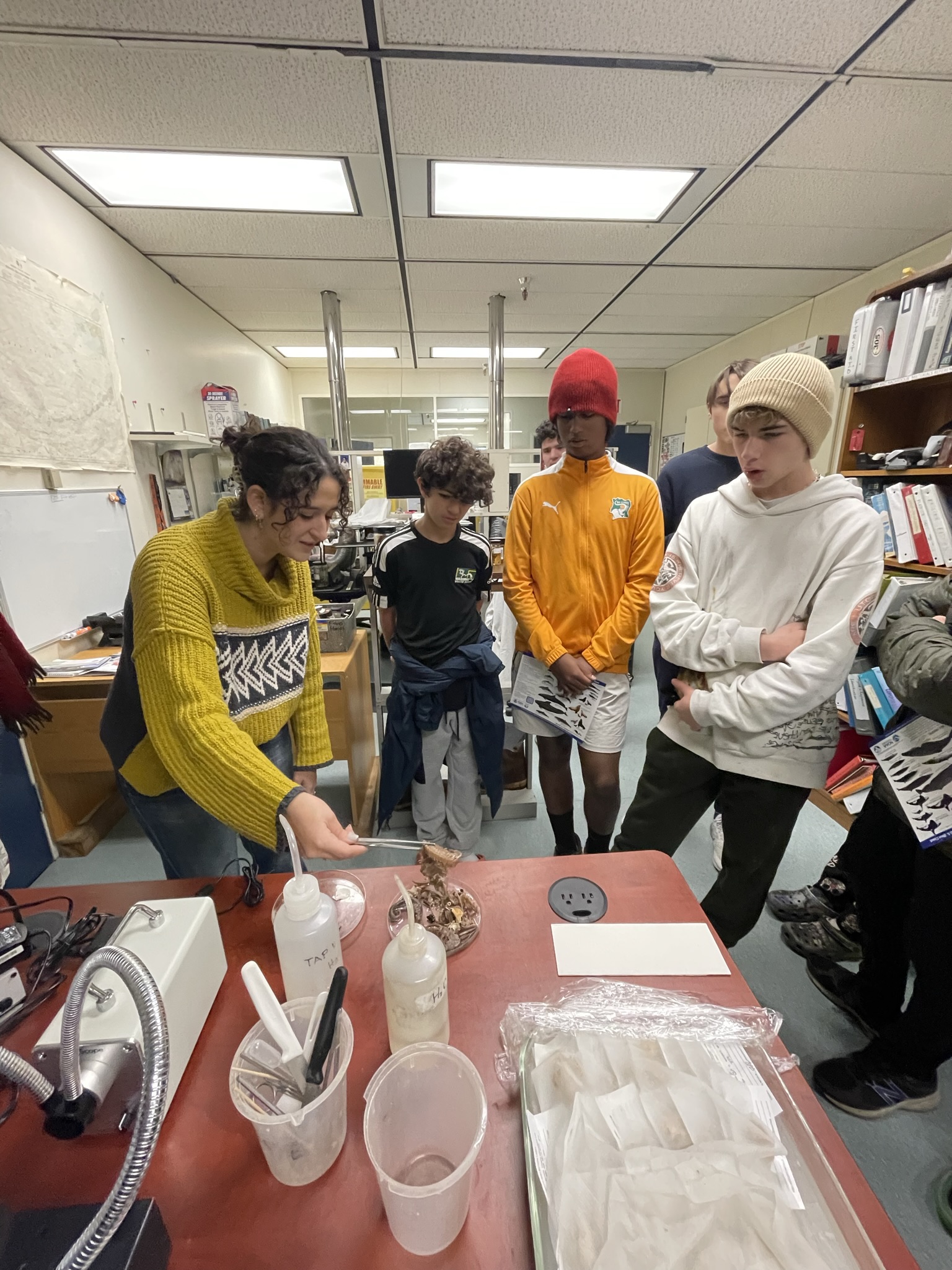
The Trophic Interactions Laboratory regularly offers tours for a variety of audiences, ranging from the AFSC HR department to groups of students. Over the past year and a half, I have proactively taken the lead in conducting and occasionally organizing these tours. This includes preparing the lab by setting up relevant reference materials from our storage room for display. I also sometimes select samples to demonstrate our stomach scanning procedure, offering a hands-on look at our work.
Last spring, a student who had visited the lab with their science class reached out, expressing interest in shadowing us for their senior project. I volunteered to host the student, coordinating all necessary administrative steps, handling logistics, and guiding them through a typical workweek in the lab. I also ensured they had access to the necessary resources for their project and presentation, both during their time with us and afterward.


COMMUNITY OUTREACH


Amherst College Food Recovery Program

In my senior year at Amherst College, I co-chaired the Food Justice Alliance (FJA), a student-led organization committed to addressing systemic food issues both locally and globally. We worked to identify the college’s contribution to these issues and devised action plans to minimize negative impacts, amplifying the voices of the community rather than prioritizing our own perspectives.
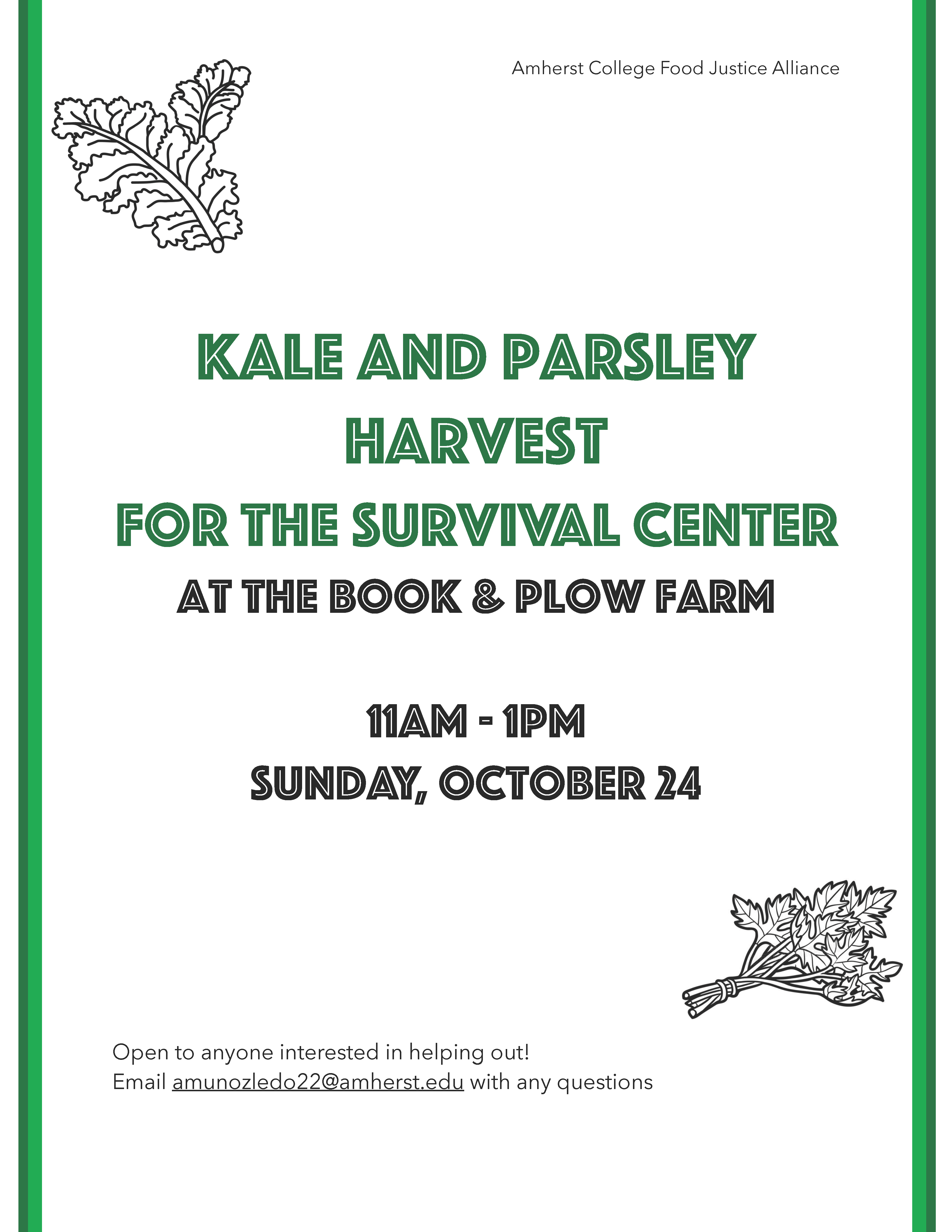
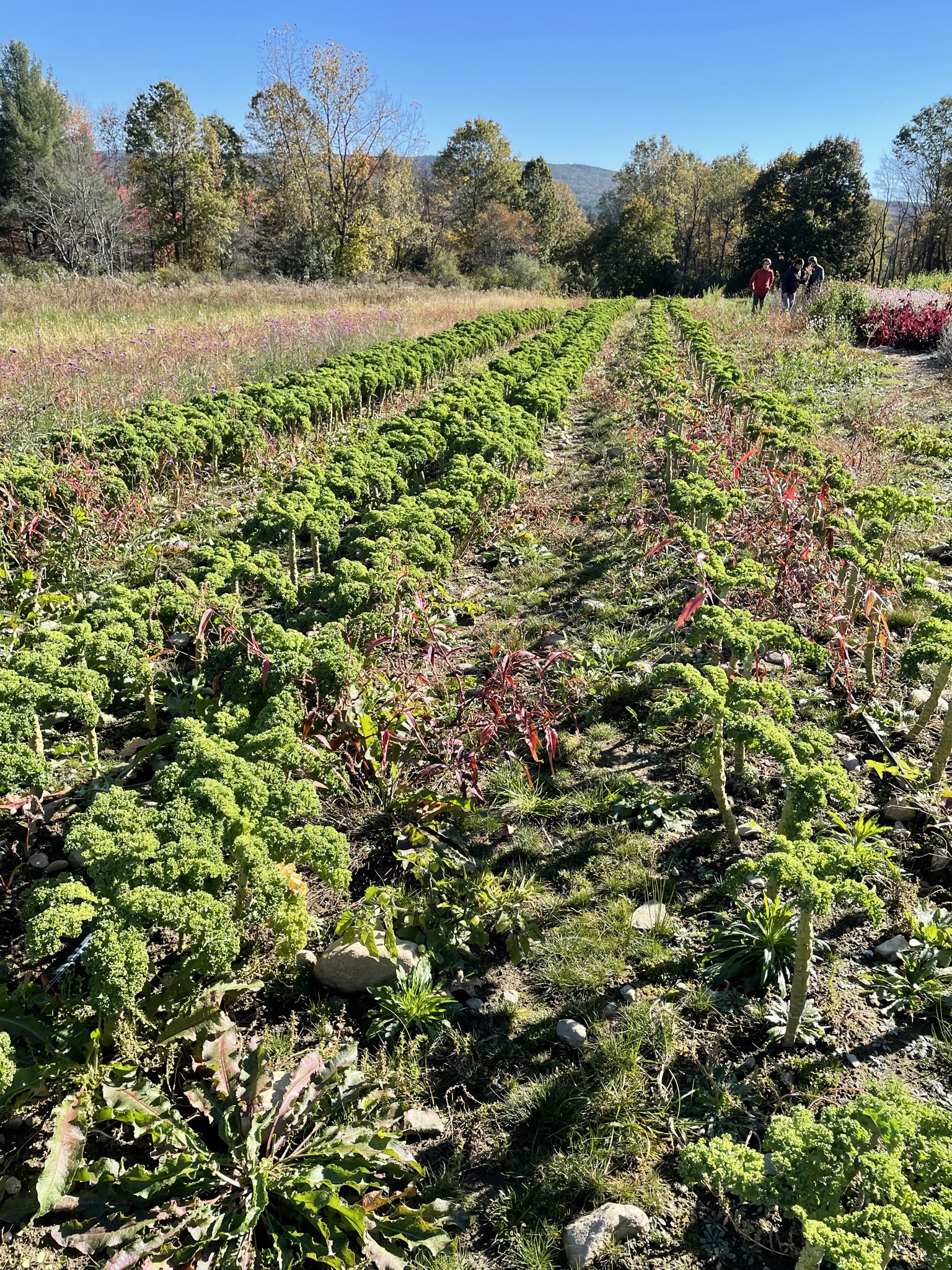
My co-chair and I hosted weekly meetings and maintained regular communication with key stakeholders, including dining hall staff, farm directors, and college administrators. As a farm employee, I often helped coordinate events like harvest days for surplus crops, which we donated to local food banks. We also led an annual fundraising event called “Share the Share” in partnership with the college farm, supporting local food justice organizations.
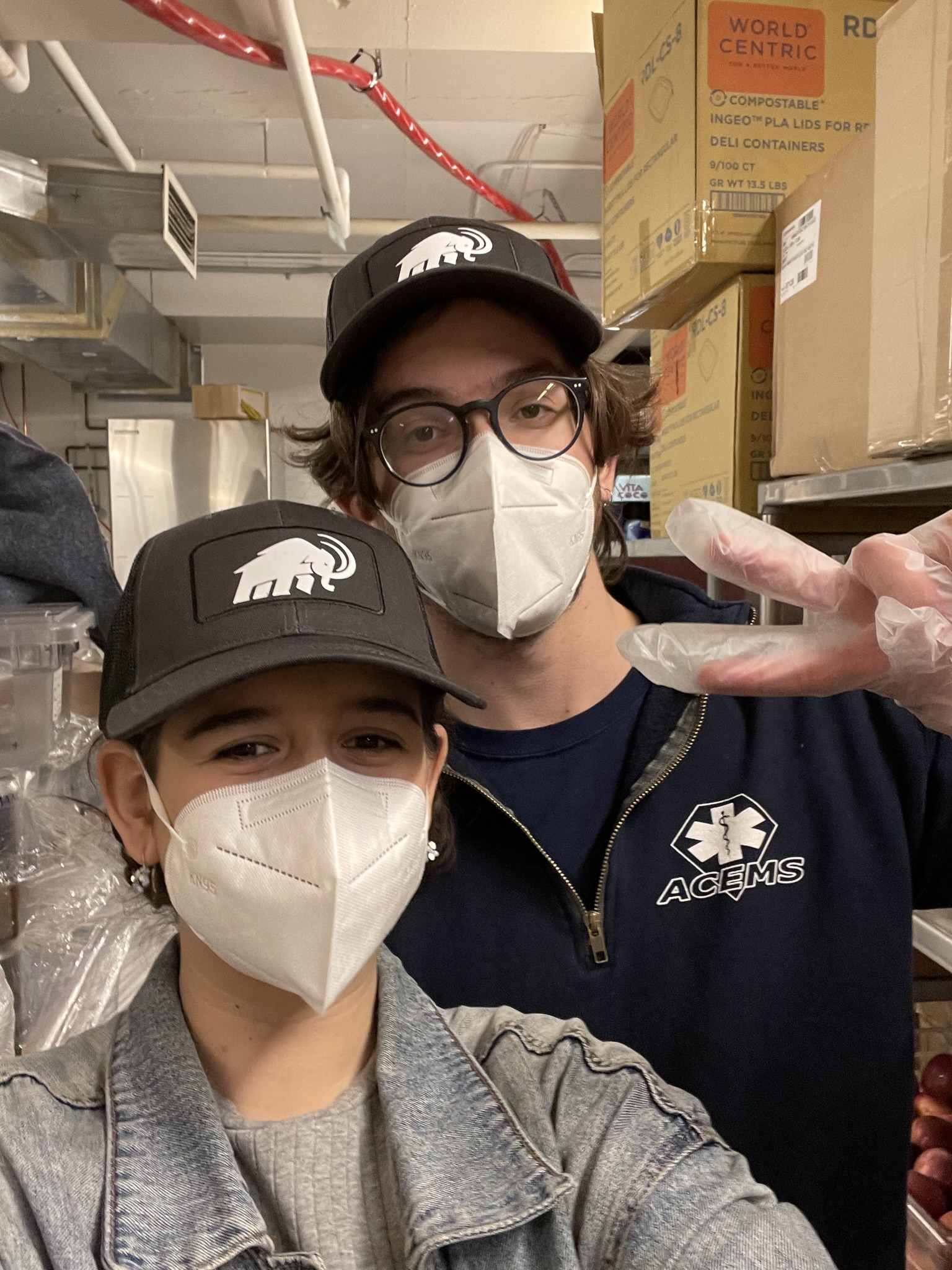
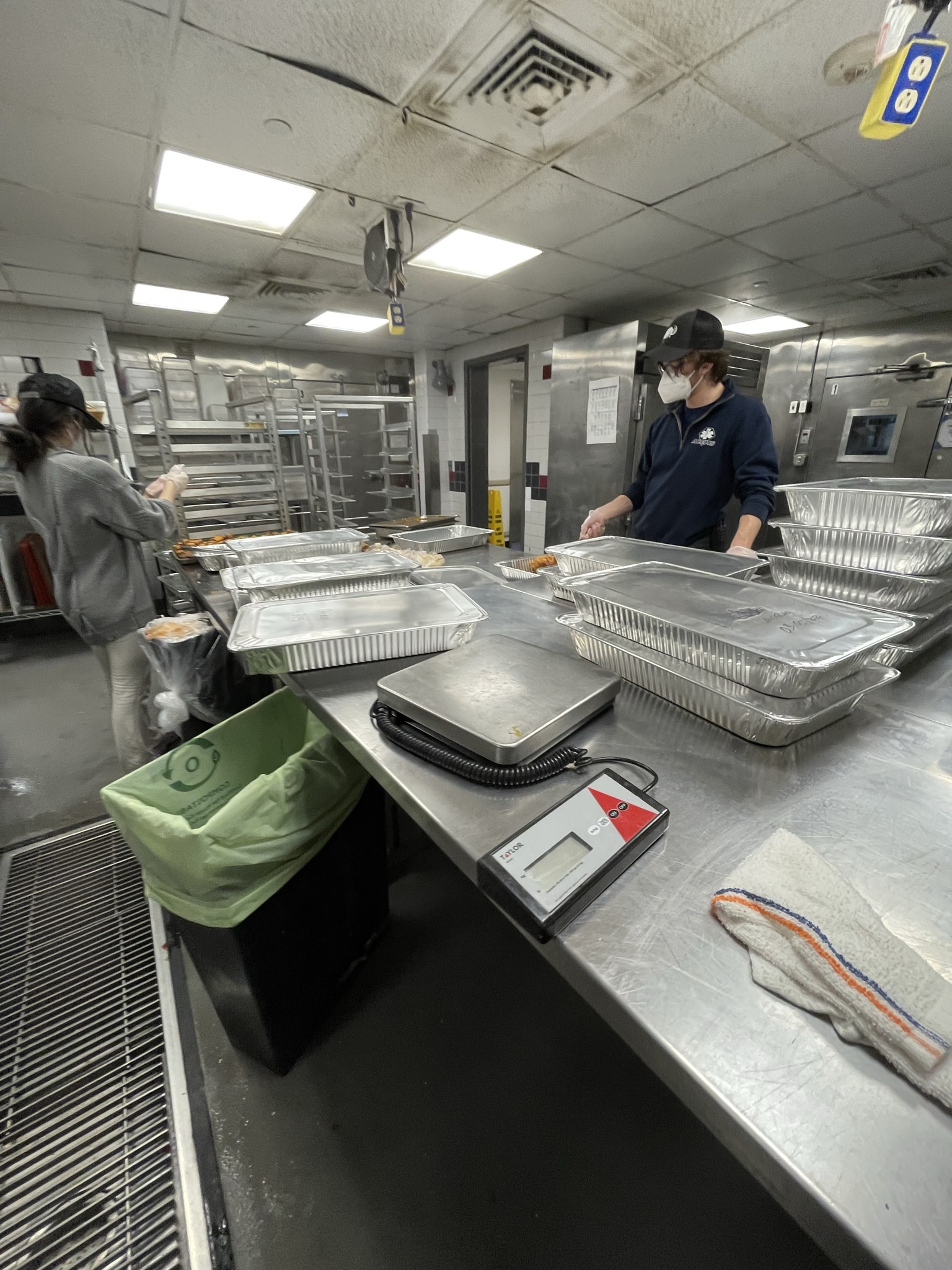
One of our main concerns during the fall of 2021 was the increasing food waste in the dining hall. After conversations with the head of dining operations left us unsatisfied, I took the initiative to explore alternatives. I reached out to the UMass Amherst Food Recovery Network and, ultimately, collaborated with the Amherst Survival Center to create the Amherst Food Recovery Program. I worked closely with the Amherst Survival Center to align food safety requirements, coordinated logistics with the college kitchen, and set up volunteer schedules for food packing and delivery. The program relied on volunteers from the student body and faculty, and my co-chair and I alternated responsibilities for training and overseeing these sessions.